The way businesses meet has changed for good. Face-to-face conferences once ran the show. Now they share the stage with virtual meetings and, increasingly, with hybrid formats that blend both. Each approach earns its place for different reasons. Knowing what each does well helps you pick the right format for the right moment, and get more from every event you run..
Where face-to-face wins all the time
You read body language, share space, and fall into the casual conversations that build trust. Screens flatten all of that.
Real Connection
Face-to-face meetings allow for a more personal connection between participants. The ability to read body language, share physical space, and engage in casual conversations fosters a deeper understanding and relationship building.
Immediate Feedback
Real-time, in-person interactions facilitate immediate feedback, enabling quicker decision-making and problem-solving. Participants can address concerns and questions on the spot, reducing the need for follow-up communication.
Networking Opportunities
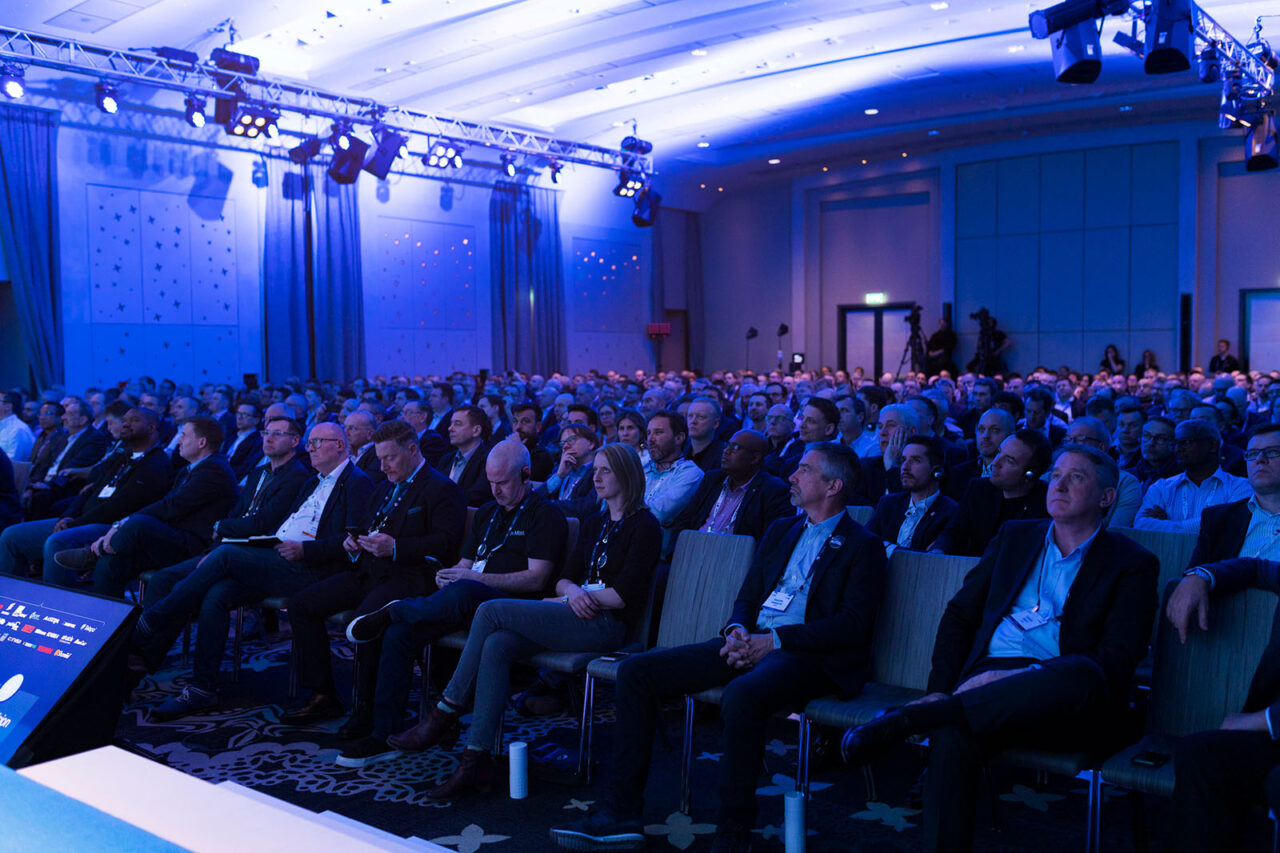
Physical conferences provide unparalleled networking opportunities. Casual conversations during breaks or networking events can lead to valuable connections, partnerships, and collaborations that rarely happen in a virtual setting.
Focus and Engagement
In a face-to-face setting, there are fewer distractions, resulting in increased focus and engagement. Roughly 73% of professionals admit to multitasking during meetings, and it happens far more on virtual calls than in the room.
The trade-offs are real. Travel, accommodation and time out of the office add up fast, especially for global teams. Physical events can shut out people facing mobility or travel barriers. And the carbon footprint of flying everyone to one location is harder to justify each year.
What virtual does best
Virtual meetings do have a place in meetings and events. We see companies use it with clear intent; town halls, training, global updates, wherever scale, cost or access matters more than physical presence.
- Lower cost. No flights, no hotels, no venue hire. Budgets stretch further
- Global reach. Anyone, anywhere, can join. That widens your talent pool and brings more diverse voices to the table
- Flexibility. People join from their own desk. No travel time, better work-life balance, easier scheduling across time zones
- A built-in record. Recordings, chat logs and shared files leave a trail you can revisit. Useful for decisions, useful for anyone who missed it
But virtual has its limits. You lose the non-verbal cues that make relationships click. Technical issues can cause a lag, dropped connections, software that won’t cooperate, resulting in derailed sessions and test everyone’s patience. Home and office distractions pull focus. And discussing sensitive information over a call means taking security seriously.

The rise of hybrid events
The meetings and events space has now evolved. Hybrid events combines the pull of in-person connection with the reach and efficiency of virtual audiences, and it’s fast becoming the default rather than a compromise. Many B2B organisations see a positive ROI when hosting a hybrid event, thanks to broader audiences and content that lives on long after the day itself.
Hybrid events has had a make-over. It’s no longer a livestream bolted onto a physical event. The shift is toward a fully integrated experience that serves in-person and virtual audiences equally, and toward active participation over passive viewing. Technology is doing the heavy lifting:
- AI in the mix – 70% of global meeting professionals now use AI in their work, from auto-tracking cameras and live captioning to highlight reels and personalised agendas
- Immersive layers – AR and VR are merging the physical and digital; virtual attendees exploring a 3D expo hall while in-room audiences see AR graphics on stage
- Content that travels – Short-form social cuts delivered within hours extend the life and reach of a single event
Striking the balance
There’s no universal right answer. The best format depends on your agenda, your audience and what you’re trying to achieve. A board-level negotiation calls for the room. A global all-hands calls for the stream. Most events sit somewhere in between — and hybrid gives you the room to serve both.
Match the format to the moment. Weigh the goals, the people and the stakes, then design around them. Get that right and you maximise productivity, widen participation and stay ready for whatever the next brief throws at you.
Whichever route fits your event and your business, the team at ALTOUR is here to help you weigh it up and get it right. We’ll guide you to the format best suited to your goals and work to make your event run smoothly, and land the way you need it to. Lets explore how we can support your meetings and events program.